


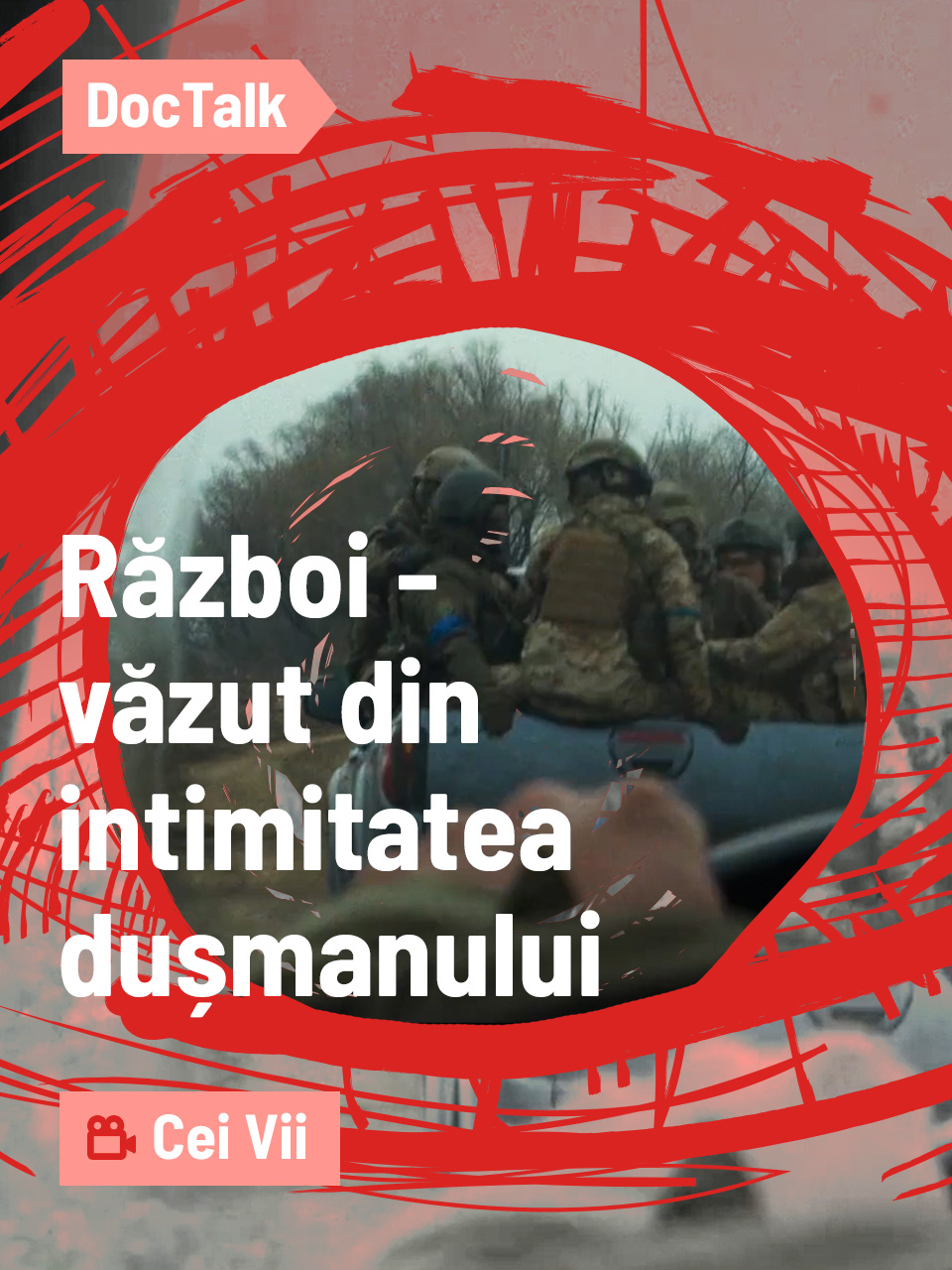
We live in a context of increasingly intense hybrid informational warfare. For the past three years, we have witnessed the bloody war in a neighboring country, Ukraine. For the first time in many decades since the end of World War II, there are clear signs that an armed conflict could directly affect Europe.
Watching the films in the thematic section On Both Sides of the Bloody Frontline offers a rare opportunity to understand lives shaped by two different wars. The Living Ones captures the armed conflict in Afghanistan through the eyes of Romanian soldiers on mission, while Kabul, Between Prayers presents the perspective of children raised under Taliban ideals, for whom the ultimate goal becomes transforming into suicide attackers in the name of Allah.
At the same time, four films explore the Russia–Ukraine war: from the perspective of a volunteer mother-soldier in My Dear Théo, to a portrait of Russian society shaped by the context of war in Happiness to all, The Shards, and Mr. Nobody Against Putin.
The documentaries and the subsequent debate create a rare space for clarity and empathy — a privileged place where we can hear both sides of the barricade and understand the cost of war from the perspective of both soldiers and ordinary people living daily life in affected countries. Above all, they reveal the true price of war: broken lives, lasting wounds, and lost humanity.
The debate will address key questions: What relevant lessons can we draw from these wars? How do soldiers fight today, and how do civilians live in countries affected by war? In a context where many European countries (France, Finland, Sweden, Germany) have issued public guidelines for civilian preparation in case of armed attack, what can we do in the absence of such information at the national level?

